
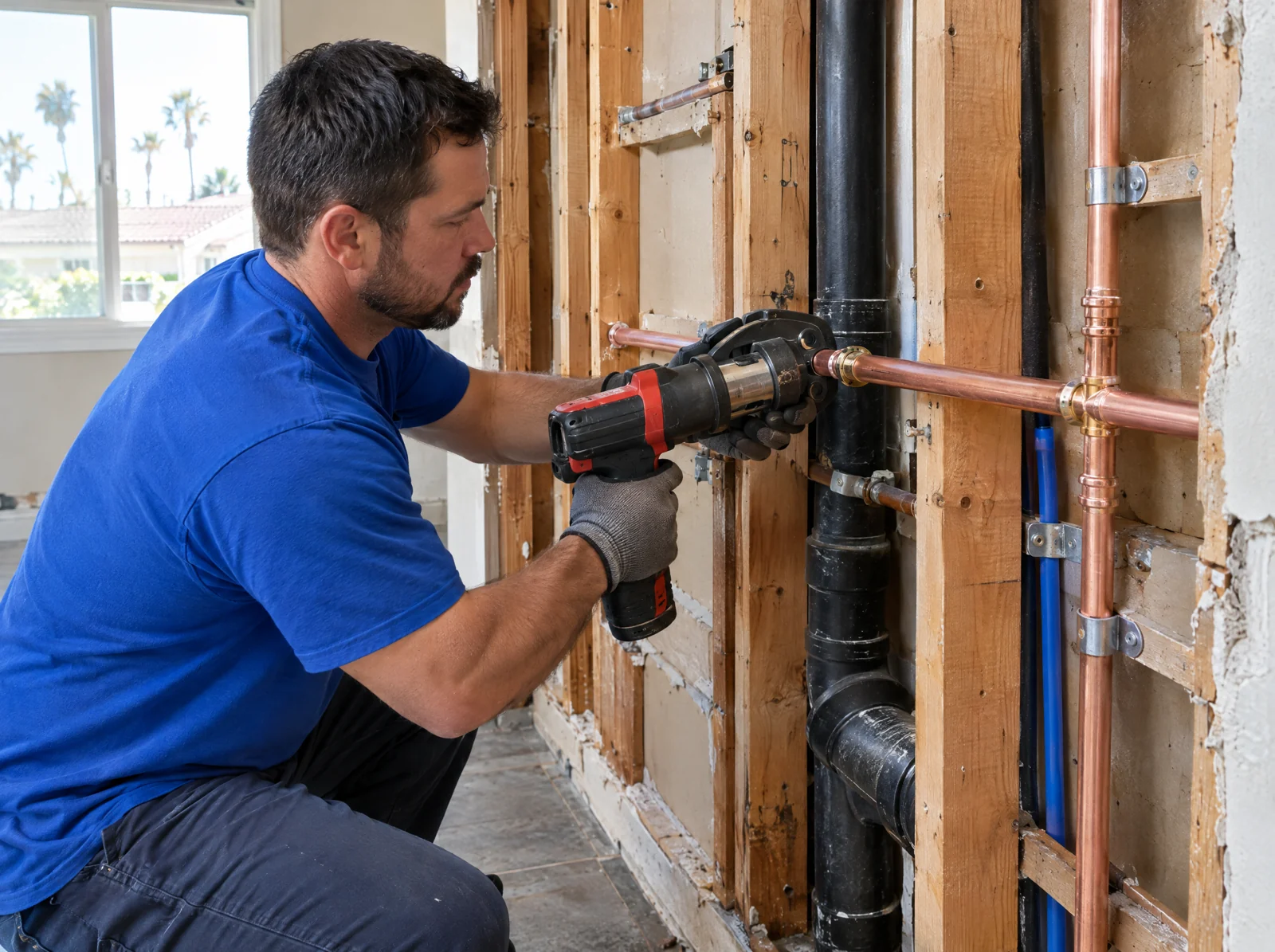
A repipe is a layout decision as well as a material decision. The best proposal fits the building, local requirements, and the fixtures served. Ask the plumber to explain the route and connection details rather than choosing by a material name alone.
FIELD NOTE
Start With The Existing Network
Identify what is known about current pipe material and where it is visible. Homes may have more than one material because of past repairs or additions. A plumber should verify accessible sections and note where the route remains concealed. If there are water-quality concerns, discuss appropriate testing instead of assuming the color of water proves a particular contaminant.
Old galvanized piping can corrode internally; other materials have different installation requirements and failure patterns. Ask which observed conditions make replacement sensible and whether a partial project would leave vulnerable sections in service.
FIELD NOTE
Compare A Few Practical Criteria
Ask which potable-water pipe materials are permitted for the property, why the recommended one suits the route, and how it will be supported and protected. Discuss temperature exposure, accessibility, and transitions to existing plumbing. A proposal should name the material and fittings, not just promise new pipes.
The installer should explain where hot and cold runs will travel, where they must cross finished spaces, and where future shutoffs or service access will be located. A shorter route is not always better if it creates difficult access or conflicts with the building.
FIELD NOTE
Clarify Transitions And Water Quality
If new pipe joins older material, ask how the transition will be made and which old sections remain. Discuss corrosion concerns where dissimilar metals are involved. These connection details affect long-term serviceability and should be in the work plan.
If lead exposure is a concern, ask the water utility about the service-line material and use a certified laboratory for drinking-water testing. Lead dissolved in water cannot be identified by sight or taste. Replacing interior supply piping does not automatically replace a lead service line or every other potential source in the home.
Need Help With
Repiping?
If this sounds like the problem you’re having, read about our repiping service or tell us what’s happening.
For urgent help, call (818) 282-5846