
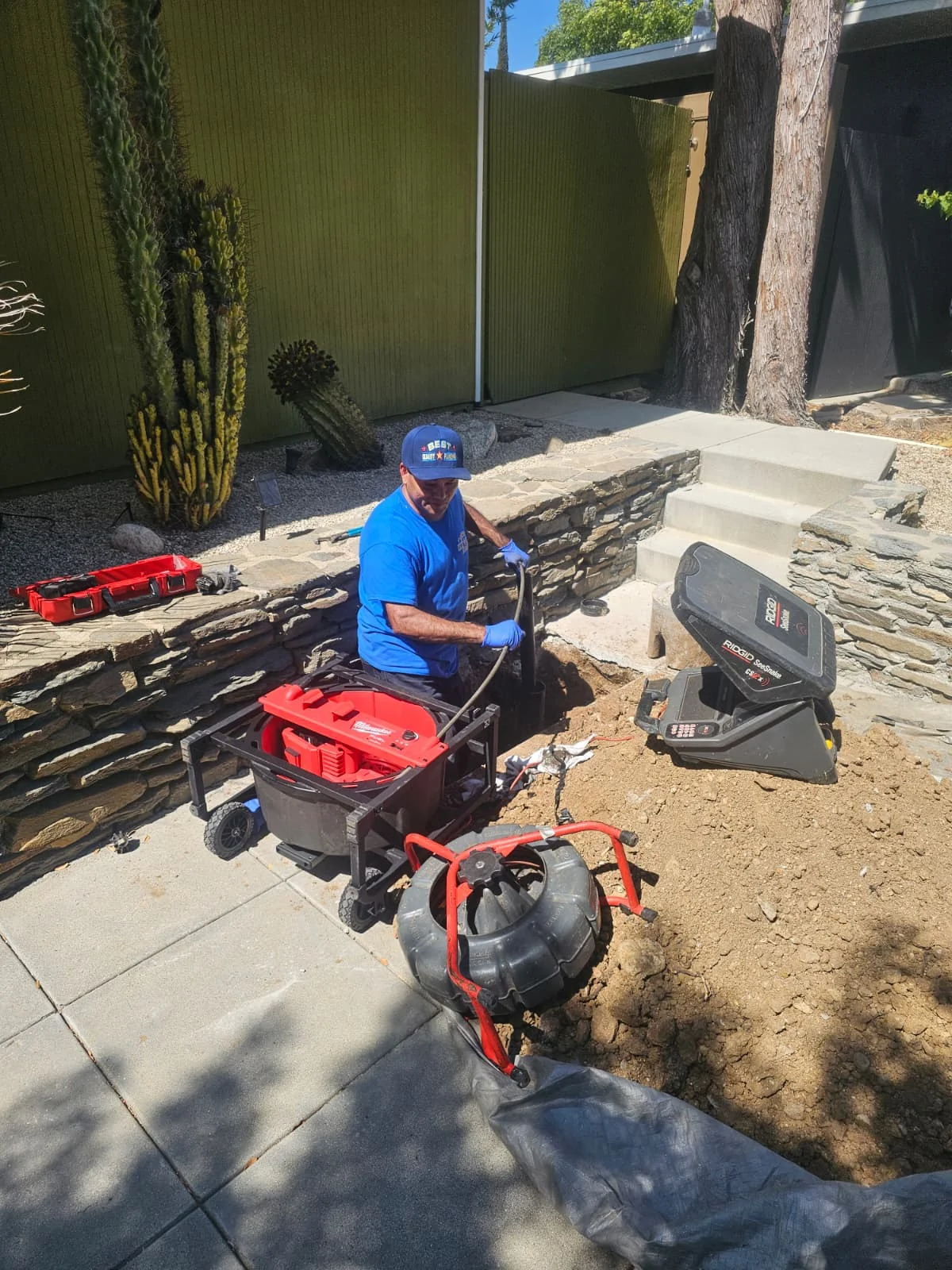
The person inspecting a drain needs a starting point and a clear question. You can help by explaining where the symptoms appeared and what work has already been done. There is no need to open a cleanout or handle a backed-up line yourself.
FIELD NOTE
Share The Symptom History
Note the first affected fixture, the order in which other drains changed, and whether the problem is constant or intermittent. If a backup happens during laundry or shower use, say so. Include any prior cleaning, repair, or inspection date, even if the earlier work seemed successful.
Bring previous photos, video, or invoices if you have them. They may show whether a suspected defect is new or at a known location. If a chemical drain product was used recently, tell the inspector before work begins.
FIELD NOTE
Identify Available Access
Point out any cleanouts you already know about and clear normal storage from the surrounding area if it is safe and dry. A cleanout may be indoors or outdoors. If you are unsure where one is, leave that discovery to the plumber.
Keep pets and children away from the work area. If sewage is present, avoid the contaminated space and report it when arranging the visit. Do not loosen caps, lift manhole covers, or run water to make the camera route easier.
FIELD NOTE
Agree On The Question
Before the inspection, ask which line is being examined and what decision the result should support. For example: is the recurring clog at one location, or is there visible damage that changes the repair scope?
Afterward, ask how much of the route was visible and whether anything blocked the view. A useful report distinguishes confirmed findings from possibilities. Keep any footage and location notes with your home records so a future contractor can understand the same section.
Need Help With
Camera Inspection?
If this sounds like the problem you’re having, read about our camera inspection service or tell us what’s happening.
For urgent help, call (818) 282-5846