
Grease in a kitchen drain can cool and cling to pipe walls. Food particles then catch in the narrowing passage. Professional cleaning may restore the flow, but the same material can accumulate again if kitchen disposal habits stay the same.
FIELD NOTE
Recognize A Possible Grease Pattern
A kitchen sink that gradually drains more slowly, then clogs again after a brief improvement, may have buildup beyond the visible strainer. The dishwasher may also discharge into that branch. These clues do not prove grease is the only cause; the line needs assessment.
If wastewater is rising in the sink, pause connected appliance use. Do not keep running hot water to push the problem farther away. Warm water can move grease temporarily while it cools in another section.
FIELD NOTE
Ask What Cleaning Reached
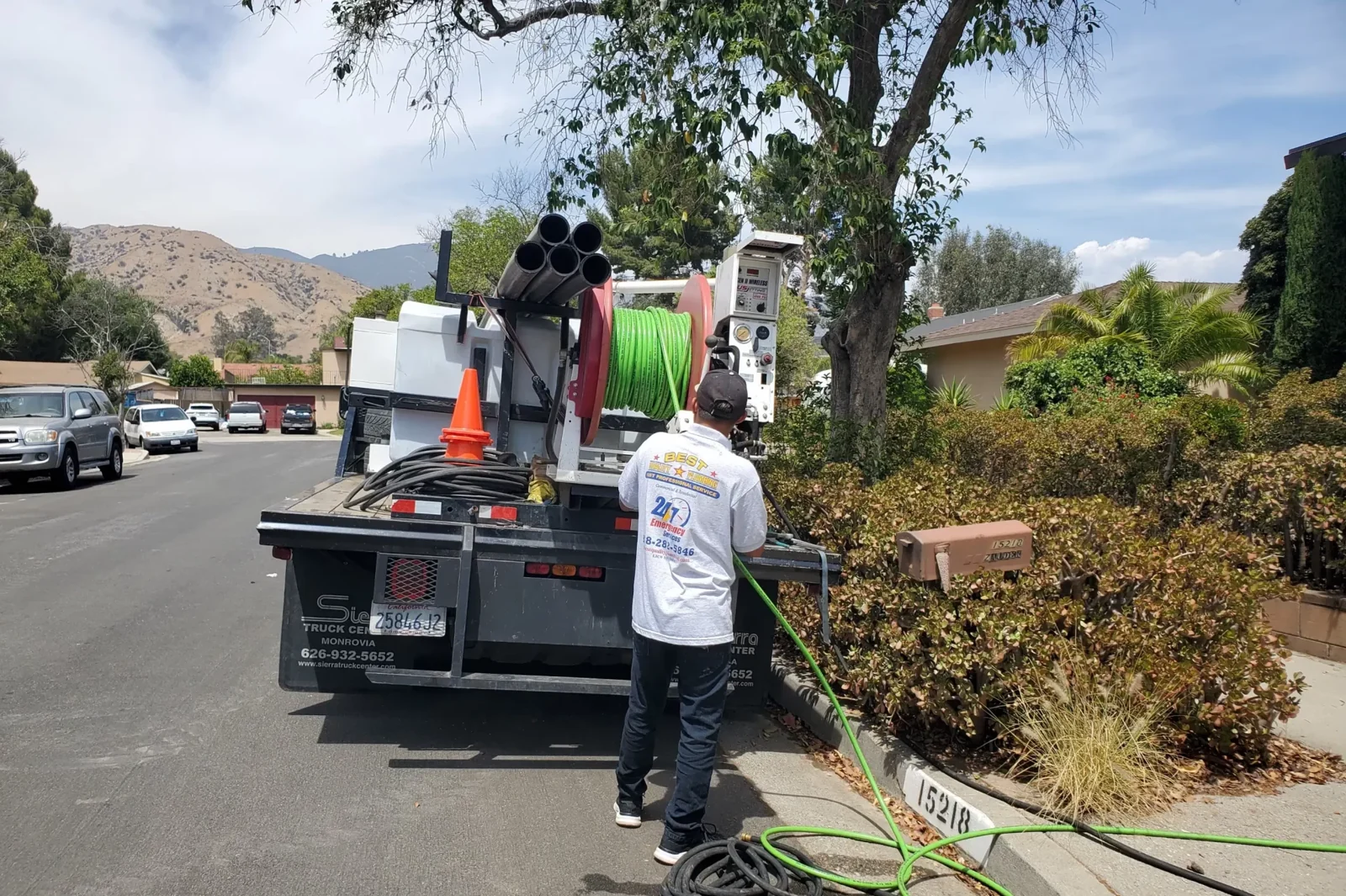
Where appropriate for the pipe, hydro jetting can wash deposits from an accessible section. Ask where the technician entered, how far the line was cleaned, and whether flow was checked afterward. If a camera was used, find out whether a defect or obstruction remained visible.
A cleaning method cannot fix a broken pipe or guarantee that every future clog is prevented. A repeated failure at one spot may call for an inspection rather than another identical cleaning.
FIELD NOTE
Prevent The Next Deposit
Collect cooled cooking oil and grease in a suitable container for disposal under local rules. Scrape and wipe plates and pans before washing. Use a basket strainer to catch food scraps, and empty it into the trash or local compost stream.
A garbage disposal breaks food into smaller pieces but does not remove grease from wastewater. Keep a brief record of any future slowdown, including which fixtures were affected. That history helps determine whether the line is accumulating material again.
Need Help With
Hydro Jetting?
If this sounds like the problem you’re having, read about our hydro jetting service or tell us what’s happening.
For urgent help, call (818) 282-5846